Learning architecture
Learning pathways, curriculum maps, objectives, sequencing, and content structures built around what people need to do.
Opening Kevin Gakarau's learning experience design portfolio.
Learning & Development · Learning Experience Design
I design learning journeys, digital courses, assessments, and capability-building systems that help people understand complex work, practise sound judgment, and perform with confidence.
What I design
I connect curriculum, digital learning, assessment, and workplace enablement so that each experience supports a real capability.
Learning pathways, curriculum maps, objectives, sequencing, and content structures built around what people need to do.
Responsive courses, scenarios, interactions, job aids, and LMS experiences that keep learners active and oriented.
Rubrics, question banks, applied tasks, and feedback systems that make progress and judgment visible.
Onboarding, coaching, quality routines, and enablement resources that support confident performance beyond a course.
Tools & delivery
I work across authoring, visual design, LMS delivery, assessment, and learning analytics. The tool changes with the audience, environment, and performance need.
Course setup, content organisation, deployment materials, and final learning-quality checks.
Structured course spaces, learning hubs, resources, assignments, and learner-facing guidance.
Articulate publishing options available when an LMS requires tracking, completion, or assessment data.
Responsive eLearning, microlearning, job aids, facilitation resources, and lightweight web delivery.
Selected learning projects
These projects are a curated sample from a broader body of course, curriculum, assessment, and enablement work. Two Articulate courses open with their original navigation, activities, and assessment intact. A bilingual clinic-visit prototype adds a practical example of designing for limited digital confidence. A branching workplace story lets learners practise decisions about AI and sensitive data.

A faculty-development experience that moves beyond AI awareness. Educators examine how generative systems work, evaluate resources for quality and bias, redesign assessment, and build a sustainable practice cycle for responsible classroom use.

A systems-thinking course that reframes electric mobility as an ecosystem challenge. Learners use a five-layer framework to analyse value, dependence, platform power, procurement, and the choices that can strengthen African capability.
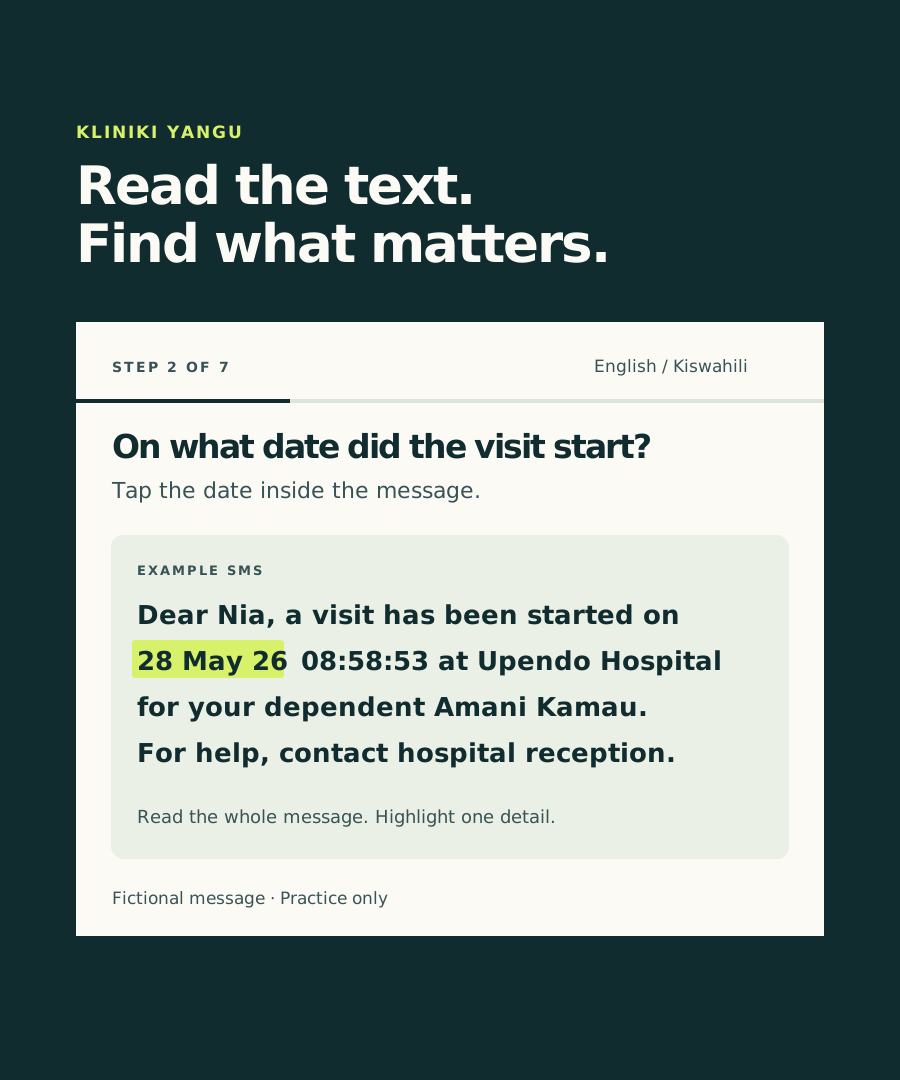
A bilingual learning experience for pregnant women in Kenya who want support with phone use. Learners practise opening a clinic message, highlighting its date, time and hospital, understanding visit updates, keeping appointment details, and asking for clarification. Short tasks, specific feedback and a new-message challenge support practice and transfer.

Step into Sam’s customer-support role. A broken-lamp complaint needs a reply, and an AI shortcut is tempting. Decide what to share, check an invented refund promise and hand a corrected draft to the supervisor. Each choice leads to a consequence you can revisit on a sticky-note decision map.
Relevant experience
My work spans the full learning cycle: understanding the need, structuring the experience, building the materials, supporting the learner, and strengthening quality over time.
Led a distributed team of 10 over six years, combining recruitment and onboarding with workload coordination, quality review, performance feedback, capability development, and KPI-based review.
Designed and developed multiple courses used across business, management, finance, leadership, entrepreneurship, and operations classes. The work includes complete 12–15-module builds, course architectures, a 120-item assessment bank, rubrics, practice activities, visual learning assets, and delivery preparation for Canvas and Blackboard.
As Co-Founder and Head of Product at Rubricly.ai, translated educator needs into rubric-grounded assessment workflows, feedback experiences, onboarding guidance, responsible-use resources, and quality standards.
Evidence-informed practice
Selected writing that informs how I design learning, assessment, feedback, and responsible AI enablement for educators and knowledge workers.
A critical examination of AI-detection scores in education and what assessment practice requires when automated signals can be wrong. The paper centres validity, fairness, due process, and educator judgment.
An inquiry into how institutions can develop educator capability through practical experience, reflection, responsible-use choices, and sustainable professional learning.
Research inside the practice
Research is part of the design process. It helps me test assumptions, examine learner risk, and build experiences around defensible evidence rather than fashionable tools.
How I work
I begin with the work people need to perform, then design the content, practice, feedback, and support that help them perform it well.
Clarify the audience, performance context, barriers, and evidence of what success should look like.
Define objectives, sequence the experience, and choose the right mix of instruction, interaction, and support.
Use decisions, scenarios, assessments, and feedback to make learner thinking visible and improve performance.
Connect the learning to real work through job aids, routines, reflection, coaching, and meaningful measures of capability.
Contact
Let's talk about curriculum, digital learning, onboarding, assessment, or workforce development.
wawerugakarau@gmail.com